
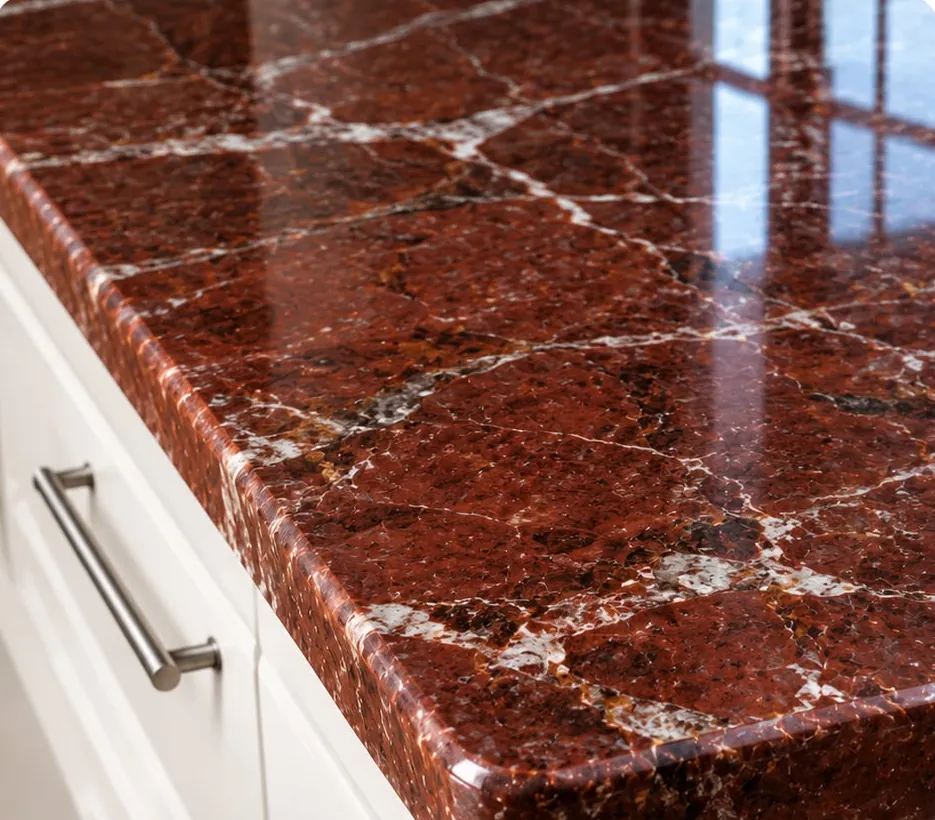
Jasper Red Marble is a richly patterned decorative stone with a deep brick-red to burgundy background, sweeping dark-red bands and fine white veins. Its bold look makes it a distinctive choice for statement walls, vanity tops, reception desks and carefully specified interior surfaces.
This guide covers the stone’s appearance, available finishes and practical uses, along with quality checks, care advice and points for international buyers.
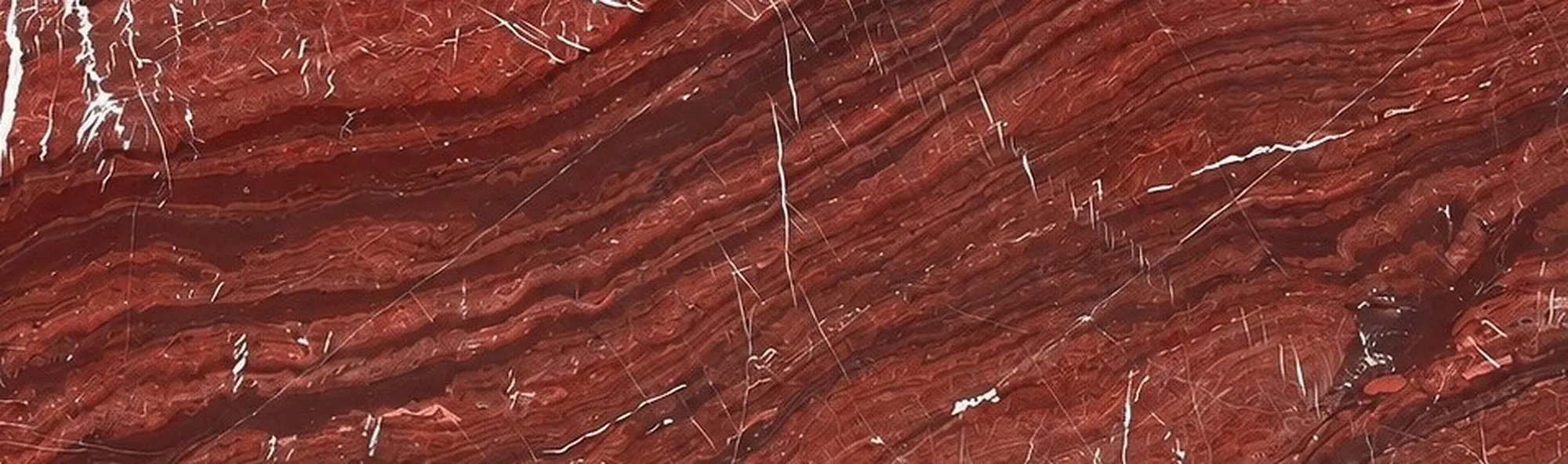
Jasper Red Marble at a glance
| Attribute | Detail |
|---|---|
| Trade names | Jasper Red Marble; Red Jasper (commercial naming varies) |
| Origin | Quarry country and source need supplier documents |
| Geological type | The trade name alone does not prove marble or geological jasper |
| Colour | Brick red, wine red and burgundy with fine pale veins |
| Pattern | Directional bands, flowing layers and cross-veins |
| Finishes | Polished, honed; other finishes subject to trial |
| Thickness | Usually about 20 mm and 30 mm; check stock |
| Best uses | Feature walls, vanities, reception desks, interior decoration |
| Export forms | Slabs, tiles, cut-to-size and fabricated pieces |
What is Jasper Red Marble?
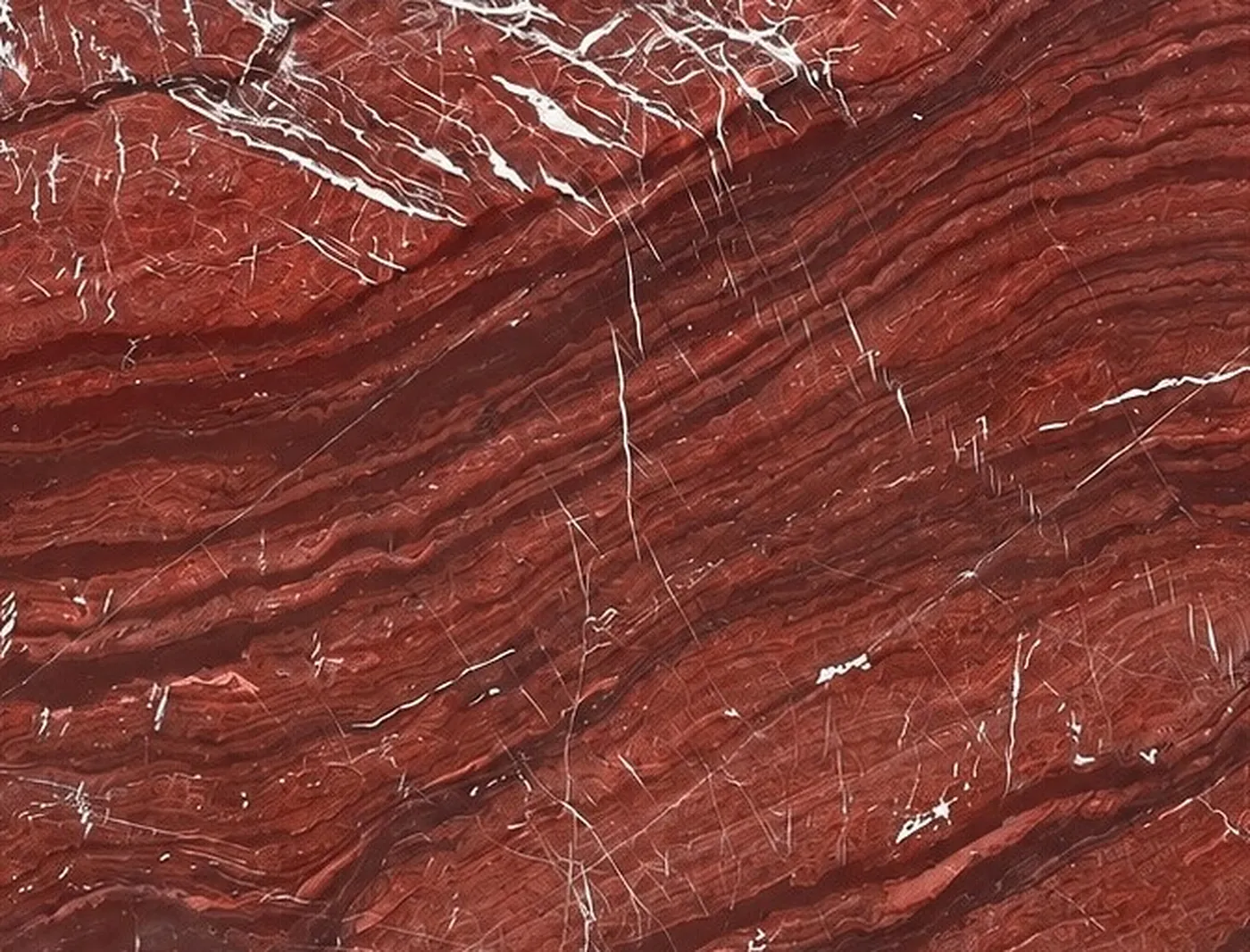
Jasper Red Marble is a commercial name for a richly coloured decorative natural stone. Its layered, directional red pattern is broken by fine, irregular white veins. A polished surface brings out the strongest contrast and depth.
Each slab is different. Buyers should approve full slab faces, not only small samples, and confirm the vein direction they want before cutting.
What makes the stone distinctive?
- Red matrix: a saturated red to burgundy ground; its mineral make-up must be confirmed by testing.
- Layered movement: sweeping darker bands give a directional look.
- White veins: narrow pale lines cross the darker layers at irregular angles.
- Variation: vein density, shade and pattern direction change from slab to slab.
Where does Jasper Red Marble come from?
Jasper Red Marble is a trade name that can refer to stone from different sources. Before ordering, confirm the quarry, country of origin, block identification and, where needed, the petrographic classification with your supplier.
Marble or jasper? The geology explained
In mineralogy, jasper is a silica-rich variety of chalcedony, while true marble is a metamorphosed carbonate rock. The trade label “Jasper Red Marble” does not by itself confirm either. A petrographic identification is needed before you assign specific chemical, structural or weathering properties.
Understanding the stone anatomy
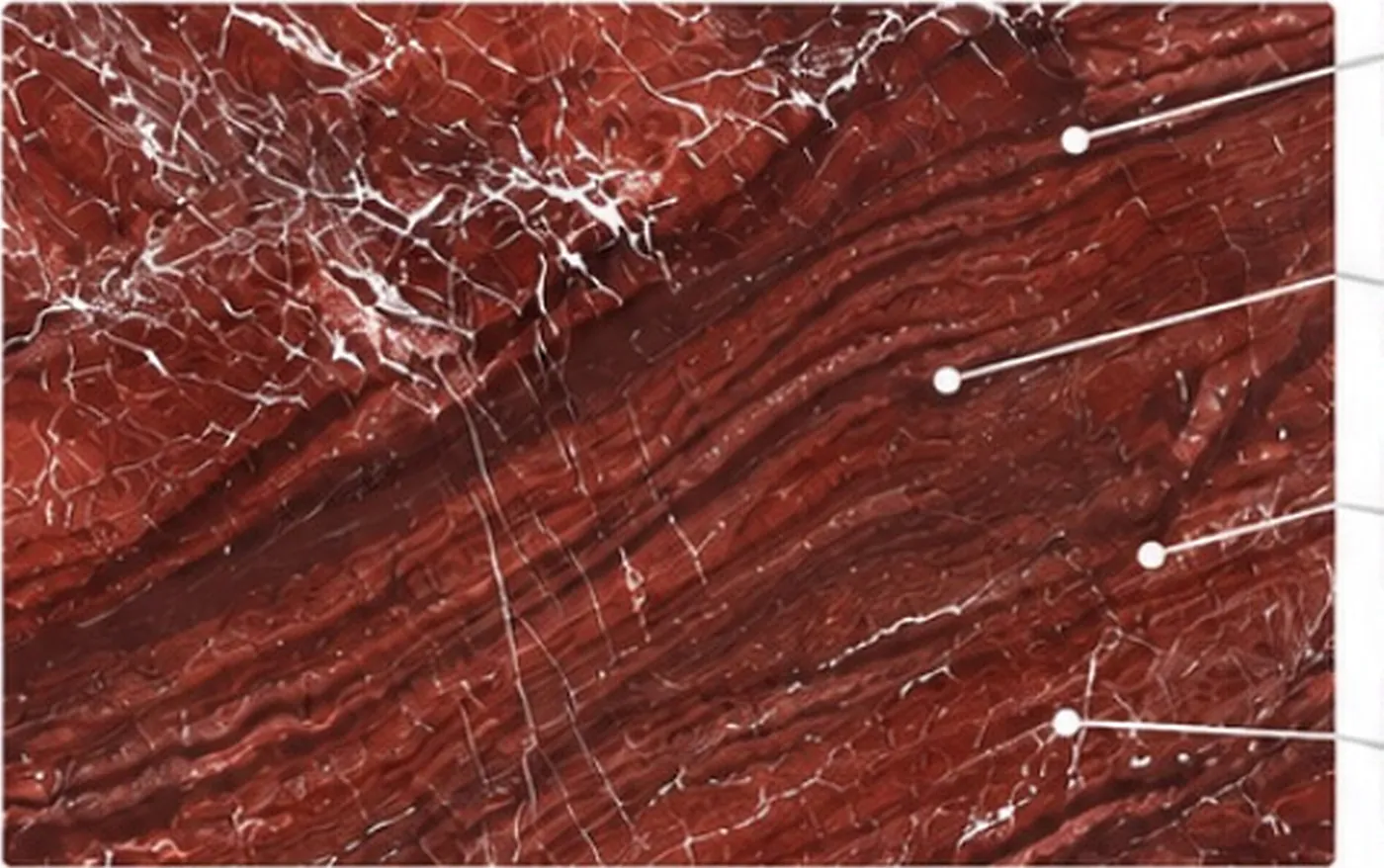
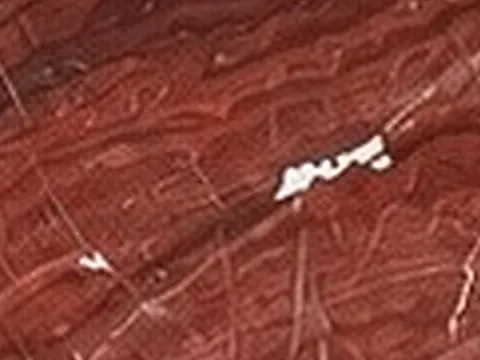 Red matrix Rich red to burgundy base; mineral identity to be verified.
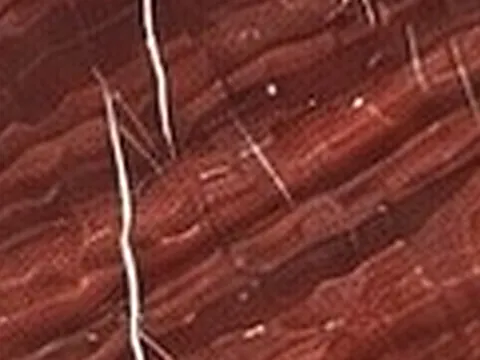
 White mineral veins Fine to medium pale mineral lines across the surface.
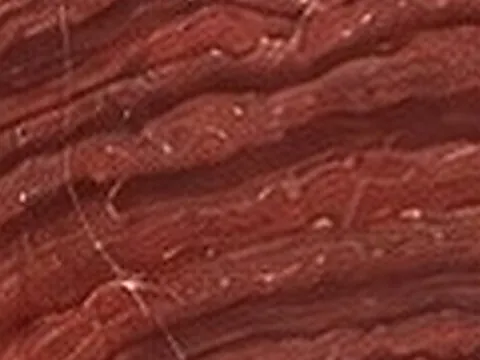
 Layered bands Directional red movement and natural banding.
 Natural variation Colour, vein density and band thickness vary by slab.
A visual guide only. Red matrix, pale veins and layered bands describe what you can see. Identifying the minerals needs petrographic testing of the actual material.
Natural pattern variations
| Description | Visual character | Buyer check |
|---|---|---|
| Flowing / banded | Broad directional burgundy bands | Approve the cutting direction |
| Vein-rich | Dense white mineral lines | Inspect continuity and soundness |
| Calmer selection | Larger unbroken red zones | Approve full-slab images |
| Mixed lots | Changes in shade and movement | Group by block and bundle |
Colour and appearance
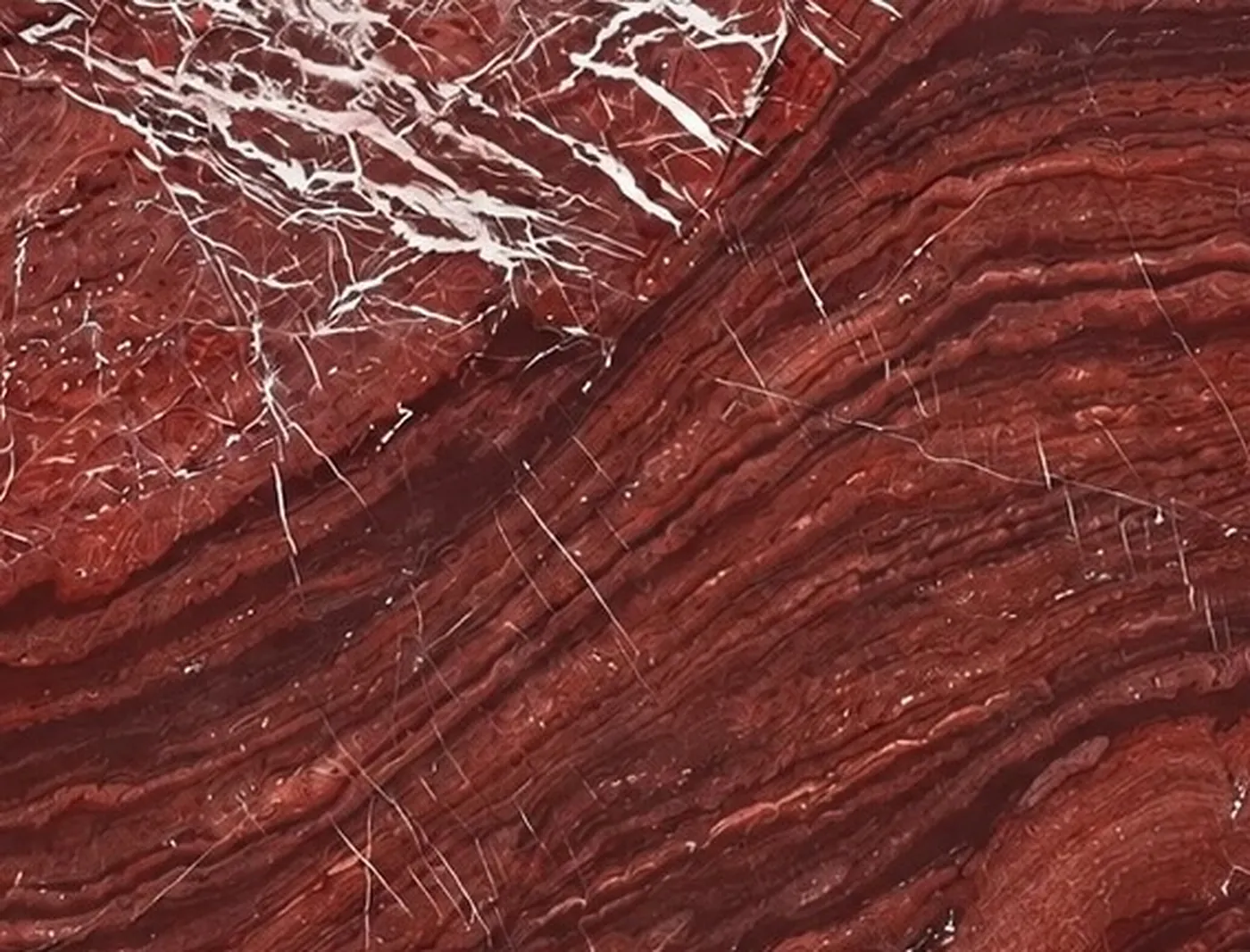
Jasper Red Marble usually shows:
- Deep crimson, wine red and burgundy tones.
- Darker red, wavy natural layers.
- Fine, irregular white veins.
- Variation in cross-veins and tonal patches.
- Strong colour depth under a polished finish.
Select, standard and commercial grades
| Grade | Appearance priority | Inspection |
|---|---|---|
| Select / premium | Approved colour depth, attractive pattern, sound slab | Check face, repairs and consistency |
| Standard | Moderate natural shade and vein variation | Agree tolerance in writing |
| Commercial / mixed | More patches, repairs or variable recovery | Inspect each slab and its yield |
These grade names are trade habits, not an international grading standard for this stone.
Veins, fissures and resin
Natural white veins are part of the stone’s character. Open cracks, weak seams and repairs need separate checking. Ask the supplier to declare resin impregnation, mesh backing, filled fissures and any colour enhancement. For large wall panels or countertops, the approved slab must be strong enough for the planned fabrication.
Technical properties of Jasper Red Marble
The trade name and photographs do not prove any physical property. Ask for an accredited laboratory report for the actual quarry source and lot. The table lists the tests to specify; these are not measured results for Jasper Red Marble.
| Property | Requirement | Test method |
|---|---|---|
| Apparent density | Obtain a lot-specific result | EN 1936 / ASTM C97 |
| Water absorption | Obtain a lot-specific result | EN 13755 / ASTM C97 |
| Compressive strength | Test the actual material | EN 1926 / ASTM C170 |
| Flexural strength | Important for panels and spans | EN 12372 / ASTM C880 |
| Hardness / mineralogy | Find out by testing | Petrographic / scratch test |
| Abrasion and slip | Project-specific floor requirements | EN 14157 / EN 14231 |
| Acid sensitivity | Test the actual composition and finish | Project-specific assessment |
Available finishes

- Polished: a glossy finish that deepens the red and sharpens the vein contrast.
- Honed: a low-gloss look with softer reflections.
- Brushed or leathered: possible after processor trials and sample approval.
Other textures depend on how sound the stone is and on its mineral make-up.
Sizes and formats
| Format | Common supply arrangement |
|---|---|
| Large slabs | Size depends on the block and usable recovery |
| Thickness | Often 20 mm or 30 mm; check calibration |
| Tiles | Cut to approved project sizes |
| Cut-to-size | Panels, vanities, counters, steps and sills |
| Vein-matched sets | Sequential slabs where the stone allows |
Applications: where Jasper Red Marble works best
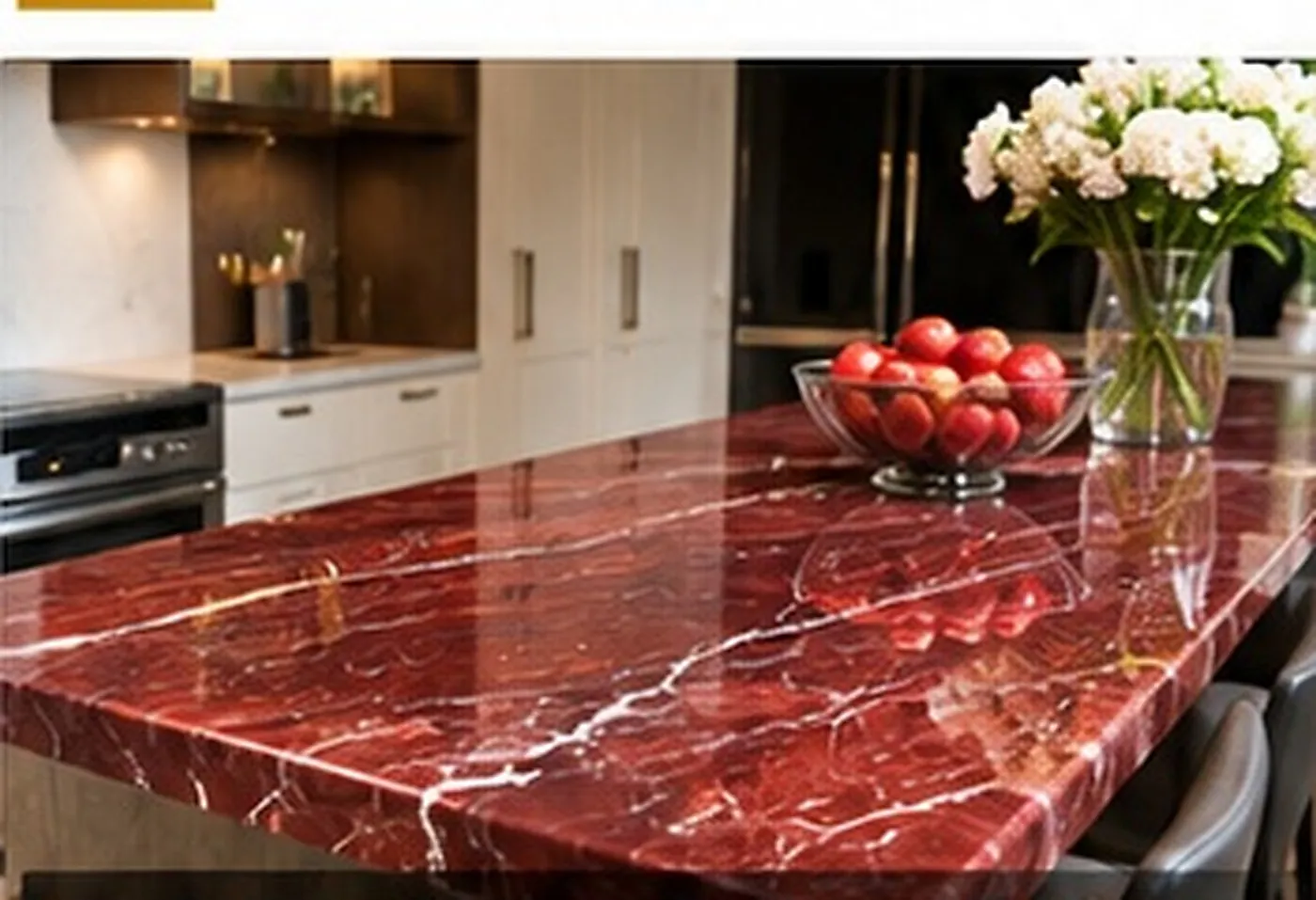
- Kitchen islands and countertops: Jasper Red can make a dramatic focal surface. Confirm the actual stone’s resistance to acids, stains and wear; carbonate marble can etch with lemon or vinegar. Use trivets and cutting boards.
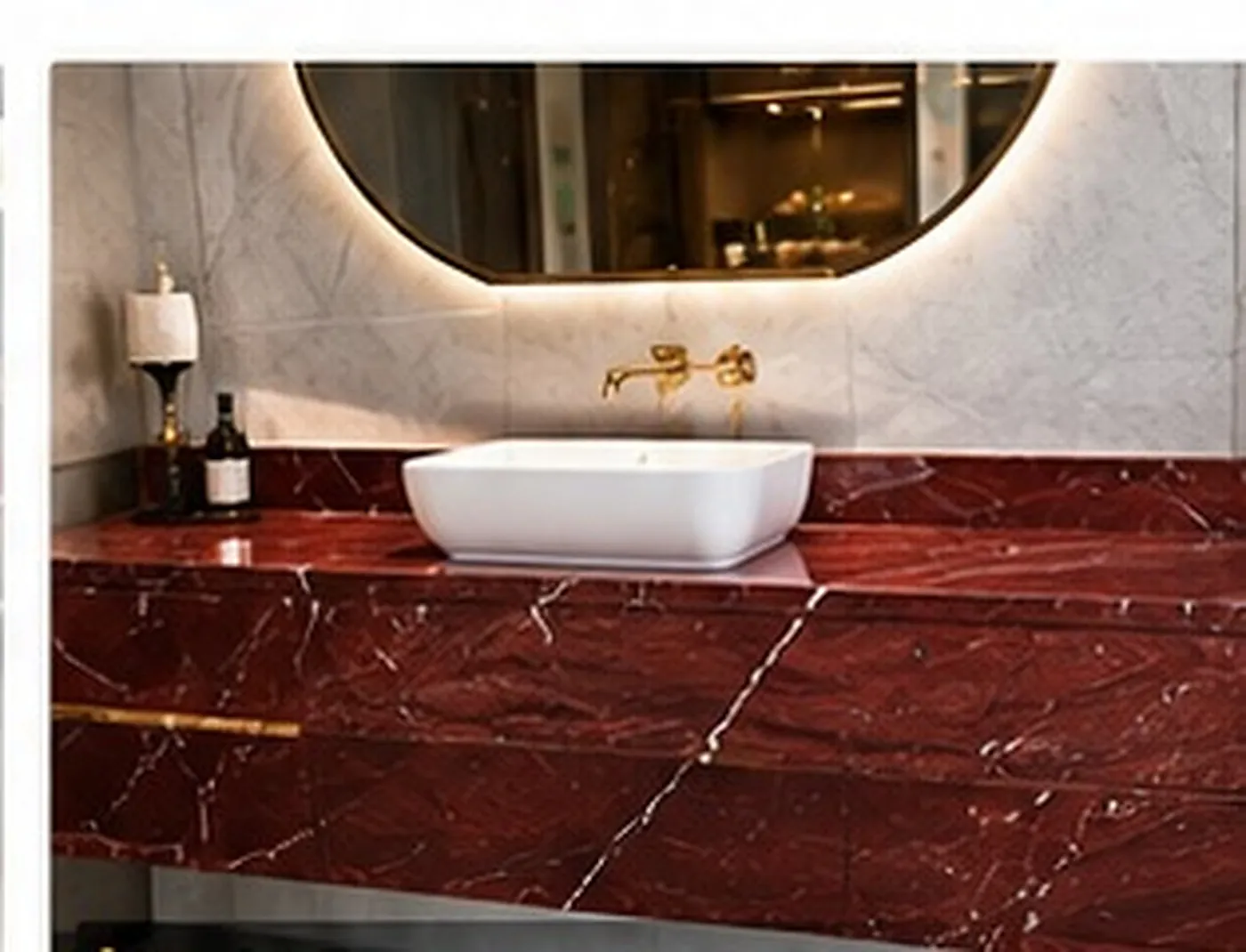
- Bathroom vanity tops: deep red surfaces go well with cream cabinets, bronze fittings and neutral wall tiles. Use a suitable sealer where advised and avoid acidic bathroom cleaners.
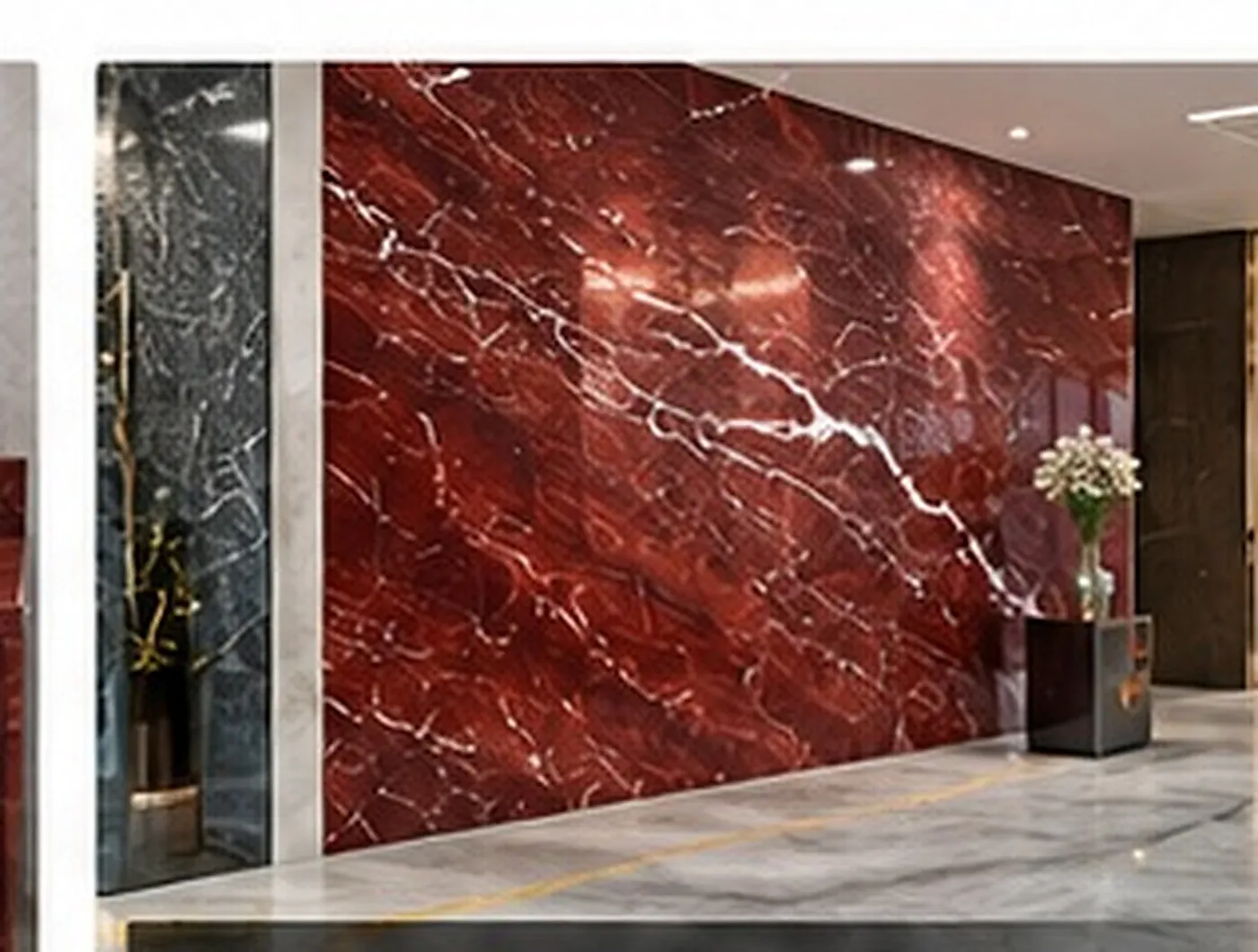
- Feature walls and reception lobbies: large polished panels show off the directional veins. Consecutive slabs can be laid for continuity or a book-matched effect, depending on the actual material.
- Other uses: reception desks, decorative furniture, carefully specified interior floors, stair risers and fireplace surrounds. Exterior use needs project-specific weathering, fixing and durability evidence.
Application images are illustrative design scenes, not photographs of verified stock. Ask for current full-slab photographs and project references before ordering.
Design and colour pairings
- Warm ivory, cream and off-white surfaces for a balanced contrast.
- Walnut, oak and other timber tones that suit the deep red ground.
- Brushed brass, bronze and muted gold accents for a refined finish.
- Charcoal and matte black for a more dramatic architectural palette.
How to check quality before ordering
- Approve full-slab photos or inspect the material in person; small samples cannot show the whole pattern.
- Confirm the quarry source, block number, bundle and slab sequence.
- Review red colour consistency, white vein spread and direction.
- Inspect both faces for open cracks, fissures, repairs and mesh backing.
- Ask about resin filling, colour treatment and polish quality.
- Measure usable slab size, thickness, flatness and squareness.
- Ask for accredited test results where the project needs them.
- Confirm packing, edge protection, crate labels and export documents.
Vein matching and countertop edge profiles

For book-matched panels, approve a digital layout before cutting, and mark slab numbers and direction arrows. Countertop edges can be eased, bevelled, half-bullnose or full-bullnose; the final profile depends on slab thickness, reinforcement and what the fabricator can do.
Jasper Red Marble price: what drives it?
The price depends on the actual source, selection, size, finishing and commercial terms, not on one universal rate.
- Grade and visual selection: colour, pattern continuity, soundness and usable yield.
- Slab size and thickness: large unbroken pieces and 30 mm material can cost more.
- Finishing and fabrication: polishing, cut-outs, edge mouldings and reinforcement.
- Volume and logistics: bundle matching, crate design, freight and insurance.
- Incoterms: ex-works, FOB and CIF quotes cover different responsibilities.
Care and maintenance
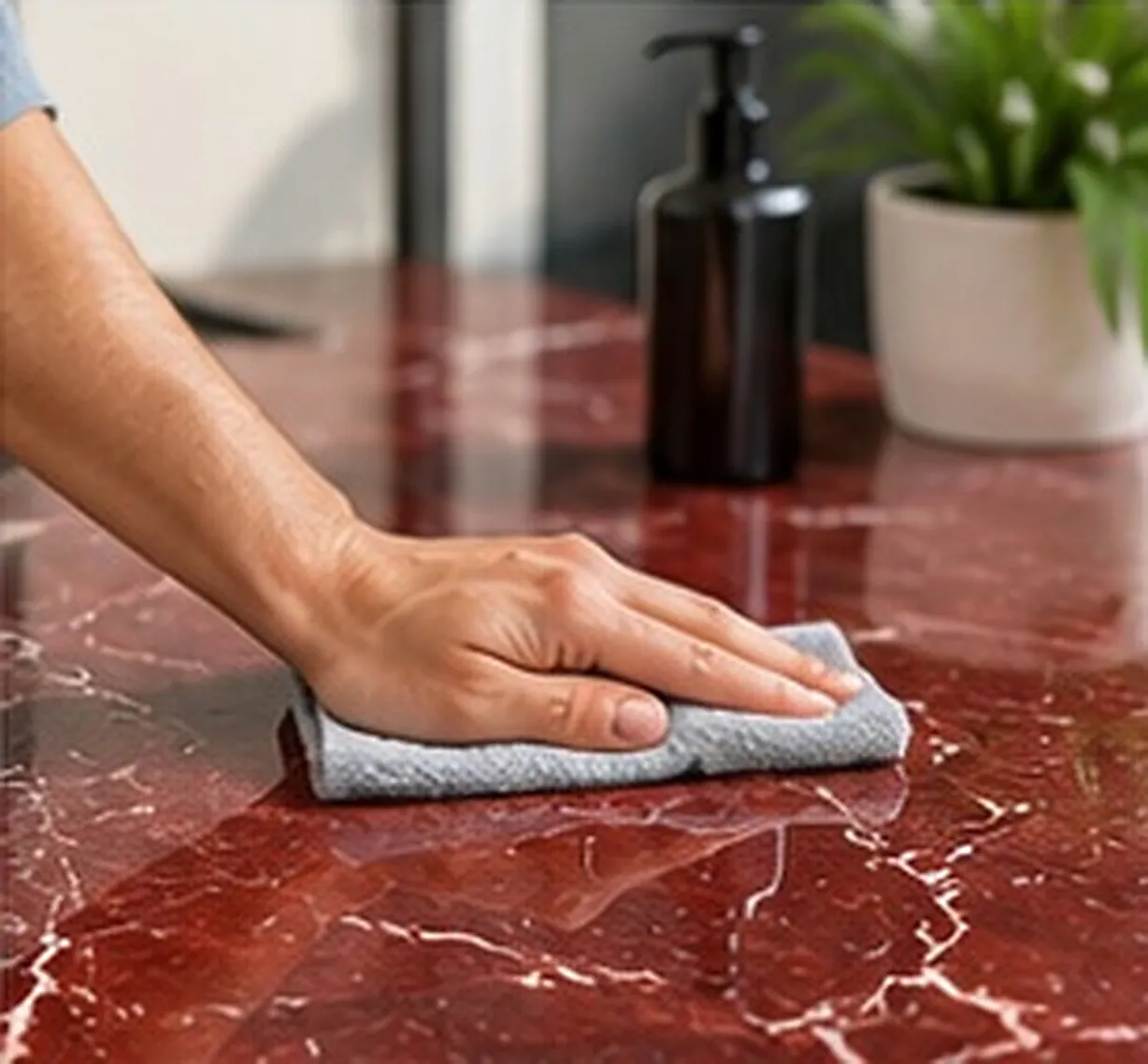
- Daily care: wipe with a soft cloth and a pH-neutral natural stone cleaner. Blot spills quickly, especially oil, coffee, wine and coloured liquids.
- Avoid: vinegar, lemon juice, acidic bathroom cleaners, scrubbing pads and harsh chemicals. Use coasters, trivets and cutting boards.
- Sealing: ask your fabricator whether a suitable impregnating sealer is needed, and test it on a sample first. Sealing does not stop acid etching on carbonate marble.
Installation and cleaning scenes are illustrative. Care must be confirmed for the actual stone and its surface finish.
Exporting Jasper Red Marble from India
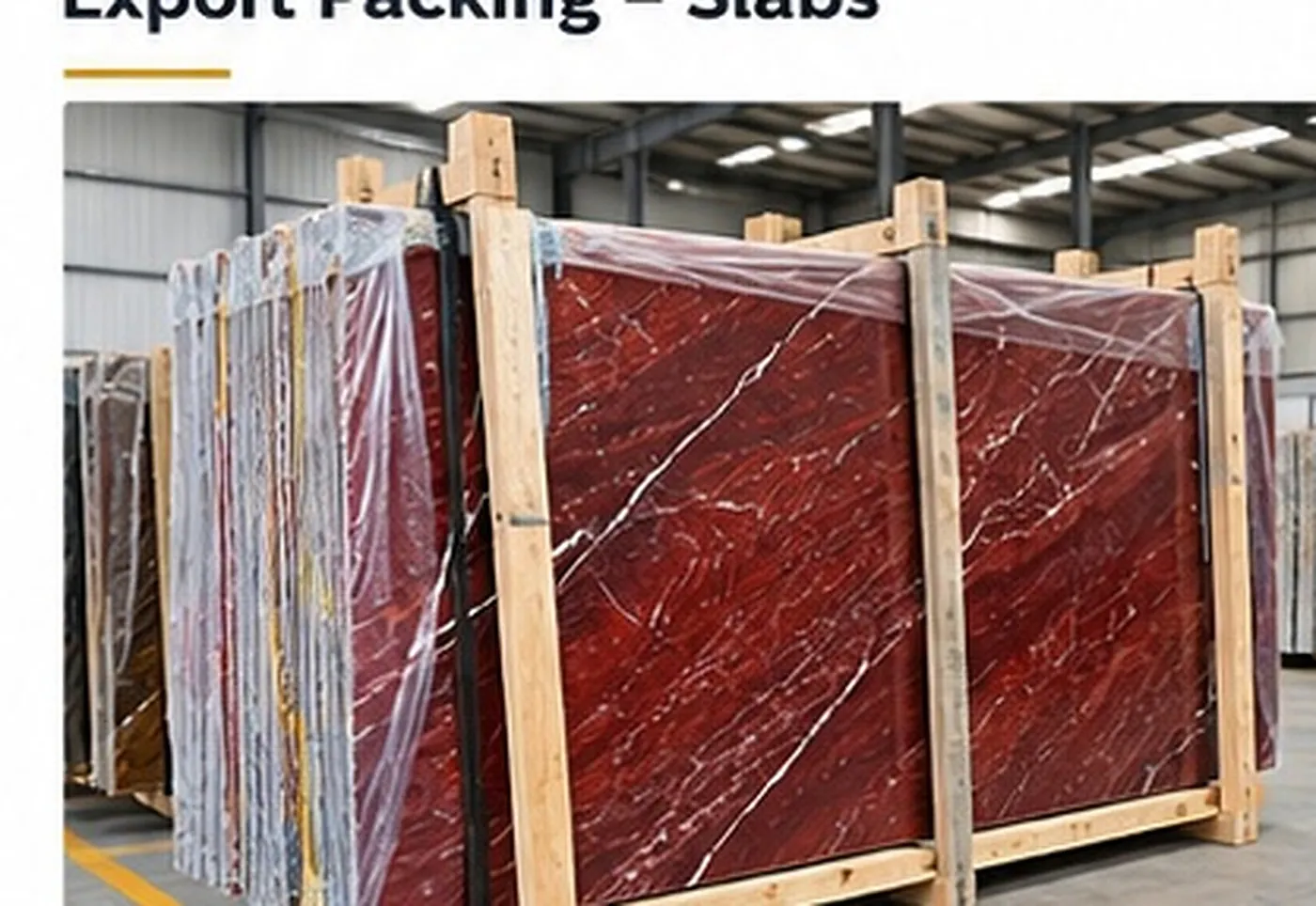
India is a major hub for processing and exporting natural stone. For this stone, confirm whether it was quarried in India or imported for processing; the country of origin should not be assumed from where it ships.
- Approve actual slab photographs, lot identification, finish, sizes and allowed treatments.
- Check thickness, usable size, slab sequence and bundle labels before dispatch.
- Pack slabs in secured A-frames or seaworthy wooden crates with separators and edge protection.
- Prepare a safe container-loading plan with even weight, bracing and lifting precautions.
- Arrange the invoice, packing list, bill of lading and any origin or treatment certificates.
- Agree the Incoterm, destination, inspection and insurance responsibilities.
Our step-by-step import guide explains Incoterms, payment and documents in more detail.
Why source from Hind Granite and Tiles?
Hind Granite and Tiles has worked in the natural stone business since 2001 and became Hind Granite and Tiles Pvt Ltd in 2026. We work across granite, marble, tiles and quartz for Indian and international buyers, with a focus on careful material selection, clear specifications and good communication.
Looking for Jasper Red Marble slabs or tiles?
Share your preferred pattern, slab size, thickness, finish, quantity and destination with us. Ask for full-slab photographs and traceable origin details before you confirm an order. See the Jasper Red Marble product page or send us an enquiry.
Frequently asked questions
What is Jasper Red Marble?
A trade name for a decorative red stone with flowing burgundy bands and white veins. Its exact geological type needs testing.
Where is Jasper Red Marble quarried?
The quarry location varies by supplier. Ask for source documents for the actual lot.
Is it real marble or geological jasper?
The trade name alone does not prove either. A petrographic analysis is needed.
Why does it have white veins?
They are natural mineral features. What they are made of, and whether they affect strength, depends on the lot.
Can it be used for countertops?
Possibly, after checking acid sensitivity, staining, soundness and fabrication needs.
Does Jasper Red need sealing?
That depends on the actual stone, its absorption and finish. Test a suitable sealer first.
Can it be used outdoors?
Only with verified weathering, anchoring and project-specific performance data.
Which finishes are available?
Polished and honed are common. Textured finishes need supplier approval.
What thickness is available?
About 20 mm and 30 mm are common, but check actual stock.
How should a buyer approve a shipment?
Approve actual slab photos, origin, grade, repairs, sizes, technical tests and packing.
Leave a Reply